
About ForaCare

This author has not yet filled in any details.
So far ForaCare has created 58 blog entries.

Decrease the Risk of Type 2 Diabetes with Early Education

Children are flooded with a great number of options when it comes to being active, yet very few manage to hit 60 minutes of moderate or vigorous physical activity every day. That could be part of the reason one in three children are considered overweight or obese.

And as childhood obesity rises, type 2 diabetes in children also grows in prevalence because increased body weight promotes insulin resistance. Type 2 diabetes occurs when the body does not use insulin properly, causing blood glucose levels to rise. High blood glucose can result in more serious complications.

It’s crucial to avoid obesity in order to help prevent type2 diabetes since they’re known statistically to be linked. The best way to achieve that goal is to encourage children to eat healthy and stay active from the very beginning.

What child doesn’t love jump roping, playing hopscotch or riding a bicycle? Children are constantly switching from one activity to another so it should be easy for parents or teachers to take some time to discover a few activities each individual child loves and encourage them to follow through.

Remember to consider nutritional guidelines as well to support healthy habits. Sugary snacks should be replaced with healthier options. Maintain moderate food proportions with meals. And focus on small changes that will build to an overall attitude of healthier eating.

Share your own advice or thoughts with #EveryKidHealthyWeek. Every year, April 22–26 celebrates children making healthy choices for a better life.
ForaCare to Demonstrate FORA Devices at CAHP Seminar on Thursday

ForaCare Inc., is traveling to Burbank tomorrow, April 18, for the California Association of Health Plans Seminar, where the team will be presenting its innovative FORA® devices along with two studies that show improved outcomes with the use of these devices.

ForaCare designs and manufactures a variety of devices including: blood glucometers, blood pressure meters and cuffs, pulse oximeters, thermometers and weight scales.

After using ForaCare’s 2-in-1 blood glucose and blood pressure devices, patients participating in a study with the Medical University of South Carolina saw a .99% decrease in HbA1c over 6 months.

COPD patients in Florida who were using a variety of FORA products—TN’G Voice glucometer, P20 blood pressure meter, TN’G Scale 550, and the Gateway for automatic uploading—in addition to alternating home visits saw a 5% readmission rate rather than the national average of 13–20%.

Several key features for many of the FORA devices include:

  • Talking function
  • Small sample sizes
  • Large LCD display
  • Bluetooth or cellular connectivity
  • Quick and accurate results

All devices are remote patient monitoring enabled. Measurements from the devices are uploaded in real time to the FORA 24/7 HealthView Telehealth System via Bluetooth or cellular connectivity.

Physicians can view results on the telehealth platform at any time, receive alerts for any abnormal readings and proactively take action to reduce complications and produce better health outcomes.

Find ForaCare at the CAHP Seminar for more information or contact us here.

CAHP Seminar

April 18, 2019, 9 a.m. to 3 p.m.

Marriott Burbank Airport Hotel & Convention Center

2500 Hollywood Way, Burbank CA 91505

TEACH Study Supports Telehealth as Key Factor in Reducing Readmission Rates

ForaCare Inc., along with Health Monitoring Optimum Services (HMOS LLC), Cano Health and MD Flow Systems, collaborated to evaluate the impact of telehealth and home visits on readmission rates for COPD patients.

The results of the TEACH (Telehealth After COPD Hospitalization) study showed just one patient of 20 was readmitted within 30 days of hospital discharge after taking advantage of telehealth and home visits. The national average readmission rate for Medicare Advantage patients is 13–20%, without this kind of intervention.

“You can see the excellent results of the TEACH study,” said Dr. Carlos Pacanins, who was a fundamental part of the leadership team at HMOS LLC, overseeing and managing each step as well as monitoring the results. “With a 5% readmission rate, I’m very confident about the results and also very confident about the future of telehealth because the devices are easy to use, the telehealth platform is excellent and overall it was a very good experience.”

ForaCare provided telehealth devices—including blood pressure, blood glucometers, pulse oximeters and weight scales—to Cano Health patients and study coordinators, HMOS LLC.

They also received ForaCare’s Bluetooth Gateway devices, which automatically uploaded data to the FORA® 24/7 HealthView telehealth system and transmitted that information to MD Flow, a healthcare information technology company.

MD Flow then sent all patient data to Cano Health, where doctors and caregivers could access that information and respond in real time to abnormal or dangerous measurements. They were able to intervene as needed to provide better health outcomes.

“The integration of MD Flow and the ForaCare platforms went smoothly; without a hitch. And, adapting the telehealth system into the Cano Health workflow was a breeze,” said Adrian Alexander, senior account manager of ForaCare, Inc. “It was quick and seamless.”

For additional care, Cano Health also established the protocol to dispatch medical assistants every other day during the 30 days to all patients participating in the study.

“Not only do we get all the information from the vitals every day, the patient feels like he’s getting more attention from his health plan because of the face-to-face time with the medical assistants,” said Dr. Pacanins.

Eight of the 20 patients experienced exacerbations within the first week of enrollment, and because they were all treated with varying combinations of antibiotics, β-agonist treatment and/or corticosteroids, none of these patients were readmitted in the 30-day post discharge period.

The one readmitted patient had to return to the hospital for unstable angina on day 13.

Pacanins noted that 80% of readmissions occur within the first two weeks of being released from the hospital, and that is the best time to take advantage of telehealth following hospital discharge.

Download the study abstract here.

CMS Issues Clarification for Reimbursement Code 99457

The Centers for Medicare and Medicaid Services (CMS) released a technical correction in March after too much confusion surrounded reimbursement code 99457, one of the three remote patient monitoring codes new to the 2019 Physician Fee Schedule Rule.

The correction clarified that reimbursement code 99457 may be billed as an “incident to” service, which expands its use beyond the physician alone. Now qualified medical professionals, under direct supervision, can also bill to 99457 and receive reimbursement for remote patient monitoring services relating to this code.

Remote physiologic monitoring treatment management services, 20 minutes or more of clinical staff/physician/other qualified healthcare professional time in a calendar month requiring interactive communication with the patient/caregiver during the month.

Code 99457

When the remote patient monitoring codes were announced, commenters requested clarification since the reimbursement code description seemed to contradict the initial response from CMS of “We note that code 99457 describes professional time and therefore cannot be furnished by auxiliary personnel incident to a practitioner’s professional services.”

CMS replaced its official response as “We thank commenters and confirm that these services may be furnished by auxiliary personnel incident to a practitioner’s professional service.”

With this clarification, medical professionals can bill more easily to code 99457, along with codes 99453 and 99454—all for remote patient monitoring reimbursement.

For more information on how to take advantage of ForaCare’s remote patient monitoring program, contact us.

Let’s Talk about National Public Health Week

We’re always embracing the relationship between healthcare and technology, and since it’s National Public Health Week, we are joining in the larger conversation.

What are some of the ways you’ve seen healthcare improve because of technology?

For ForaCare, the number one benefit we see is better health outcomes through remote patient monitoring. This includes improved glucose and HbA1c levels in diabetics; fewer hospitalizations for patients with COPD, CHF and multiple chronic conditions; improved quality of life in COPD patients; and lower mortality in CHF patients—according to our white paper.

Our remote patient monitoring end-to-end solution provides these positive results for patients managing chronic diseases. And with 20% of ForaCare’s staff dedicated to research and development, we can continually innovate and bring you the latest advancements to our medical devices.

Share your story of how technology has helped your health with #NPHW.

Diabetes Alert Day Brings Awareness to the Risk Factors

An estimated 84.1 million Americans have prediabetes, a condition in which glucose levels are elevated but not enough to be diagnosed with diabetes.

Are you at risk?

The most common form of diabetes is type 2, which is caused by genes, ethnicity and age as well as lifestyle factors including physical inactivity, obesity, high blood pressure and high cholesterol. Although it is not possible to change your genetic information, there are plenty of lifestyle choices you can make to minimize your risk.

Lose weight, stay active and eat healthy.

Just 10-15 pounds in weight loss could make a huge difference. Once you achieve your weight goal, stay active to keep those pounds off. Pair this with a reduced-calorie meal plan and your chance of developing type 2 diabetes will be reduced.

If you have recently been diagnosed, remember one of the best ways to manage your diabetes is to check your blood glucose levels every day.  Your levels will allow you to make decisions about food, physical activity and medication.

As a company focused on chronic disease management, ForaCare can help you manage your diabetes with our innovative medical devices.

Help us bring awareness to the risks by sharing #diabetesalertday.

ForaCare’s Telehealth System Will Be Exhibited at ATA Conference, April 14–16

ForaCare, Inc., an early provider of remote patient monitoring, will be demonstrating its complete telehealth system at the American Telemedicine Association 2019 Annual Conference and Expo in New Orleans.

With more than 20 years of experience in the industry, ForaCare continues to provide an end-to-end solution for chronic disease management by designing, manufacturing and selling their devices—all of which connect to the FORA® 24/7 HealthView TeleHealth System for remote patient monitoring.

Blood glucose, blood pressure, blood ketone, pulse oxygen and temperature measurements can all be stored in the cloud-based 24/7 HealthView system. Patients and physicians can view real-time data with built-in charts and reports.

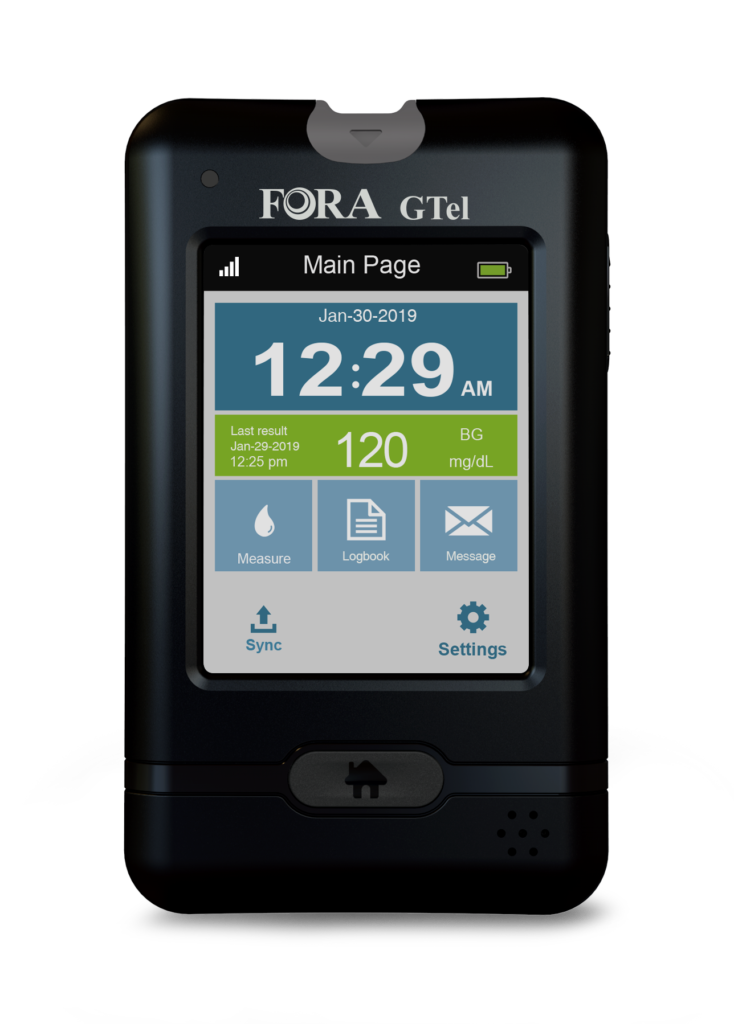
Visit the ForaCare team at booth #1829 and experience the ease of connectivity between FORA devices and the 24/7 HealthView system. Plus, get a preview of ForaCare’s latest innovative device: the new FORA GTel multi-functional monitoring system made in particular for high-risk diabetics.

Enter the raffle for your chance to win a FORA TN’G SpO2, and enjoy our free giveaways!

ATA 19 Annual Conference and Expo

Ernest N. Memorial Convention Center

900 Convention Center Boulevard

New Orleans, Louisiana 70130

The FORA Mobile Care Station Brings Efficiency to Nursing Facilities

The FORA® Mobile Care Station, recently developed by ForaCare, Inc., is an efficient and convenient solution for nursing facility staff to easily measure vitals and consistently monitor their residents who have chronic diseases such as diabetes, hypertension, congestive heart failure and COPD.

Five individual devices—used to measure blood glucose, blood pressure, temperature, weight and pulse oxygen—are arranged on one roller cart for portability and ease of access. Each device included with the mobile care station meets or exceeds all HIPAA requirements because of complex encryption and authentication, lowering potential violation exposures.

One of the unique devices included is the FORA 2-in-1 D40 Pro, which monitors both blood glucose and blood pressure. It has built-in Irregular Rapid Beat (IRB) technology, detecting potential risks before a problem arises.

This D40 Pro in particular reduces costs by eliminating the need for two separate devices. Additionally, the mobile care station reduces personnel costs by eliminating the need to manually enter measurements into the system.

Vital sign measurements are wirelessly transmitted to the iFORA CS (PCC) app, located on the tablet attached to the mobile care station, and then integrated into the PointClickCare® Electronic Health Record system.The automatic data transmission reduces the possibility of human error.

Health care professionals can log in to the EHR system with their credentials at any time to review the data and modify patients’ treatment plans accordingly. This aligns with the single, unwavering goal of ForaCare technologies, which is to lead to better health outcomes.

For more information about the FORA Mobile Care Station or to request a demo, visit http://foracare.com/mcs/ or call 1-888-307-8188 to speak to a sales representative.

March 14 is World Kidney Day

The leading causes of kidney failure are diabetes and hypertension—that’s why ForaCare is joining in the celebration of World Kidney Day today.

High blood glucose and high blood pressure can damage the kidneys. When damaged, the kidneys don’t filter blood properly and can cause waste to build up in the body leading to other health problems.

So, what’s the best way to prevent, or at least slow down, kidney disease?

Monitor your blood glucose and blood pressure regularly, and work toward lowering your levels to a normal range. Plus, develop or maintain healthy lifestyle habits such as eating right, exercising, sleeping enough hours every night, and taking medications as prescribed.

We understand the importance of healthy kidneys, and ForaCare’s innovative devices are amazing tools that monitor your vital signs to keep you well.

Share #WorldKidneyDay across social media to help bring awareness to kidney health.

ForaCare to Showcase New Medical Device at AMCP Annual Meeting, March 25–28

ForaCare, Inc. is excited to introduce its new FORA® GTel multi-functional monitoring system at this year’s AMCP Managed Care & Specialty Pharmacy Annual Meeting in San Diego. 

The new FORA® GTel Multi-Functional Monitoring System with built-in cellular connectivity is the perfect solution for high-risk diabetic patients.

The GTel is a total diabetes care solution with built-in cellular technology, which allows high-risk diabetics especially, to easily share their data with their healthcare providers in real time. Doctors and patients can interact with two-way messaging to understand why results are abnormal and the healthcare team can adjust the treatment plan as needed.

Some of the features of the FORA® GTel include:

  • Blood glucose and blood ketone measurements
  • Touchscreen technology
  • Talking function (English/Spanish/French)
  • Small 0.5 µl sample size
  • GDH-FAD gold strip technology for greater accuracy

The GTel and other FORA® devices—which measure blood glucose, blood ketone, blood pressure, Sp02, temperature, and weight—will be available for demonstrations at the AMCP Annual Meeting.

Visit the ForaCare team at booth #512 to get hands-on experience with various FORA® products and see how easily every single device connects to the 24/7 HealthView system for Remote Patient Monitoring. 

Enter the raffle for your chance to win a FORA® TN’G SpO2, plus enjoy our free giveaways!


AMCP Annual Meeting Expo
Monday, March 25–Thursday, March 28, 2019
San Diego Convention Center
111 W Harbor Dr, San Diego, CA 92101